Yankee
1906 William Frank Stone Schooner
Celebrating 120 Years on San Francisco Bay
Yankee was launched on the morning of April 18, 1906—the day the great San Francisco earthquake struck. As the city shook and burned behind her, she slid into the Bay for the first time. She was born, quite literally, in the same hour that reshaped San Francisco forever.
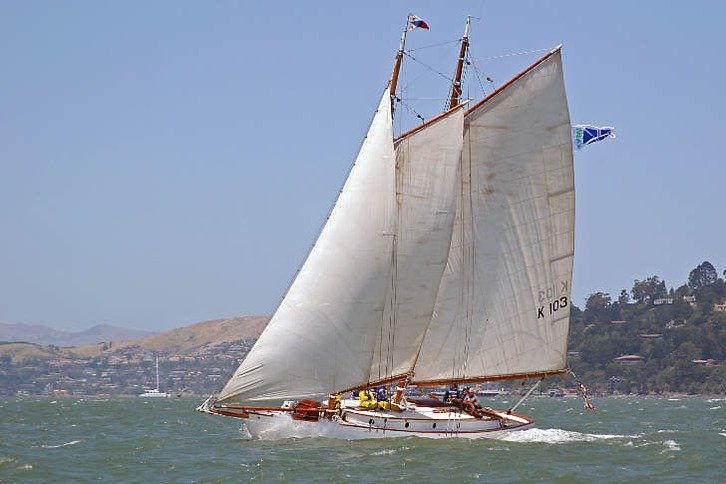
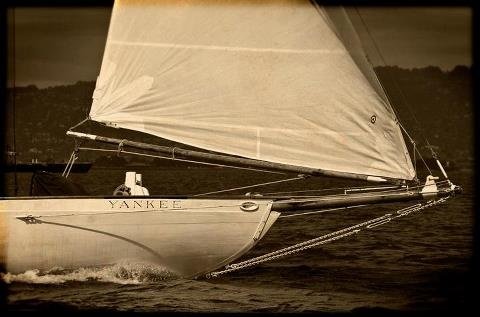
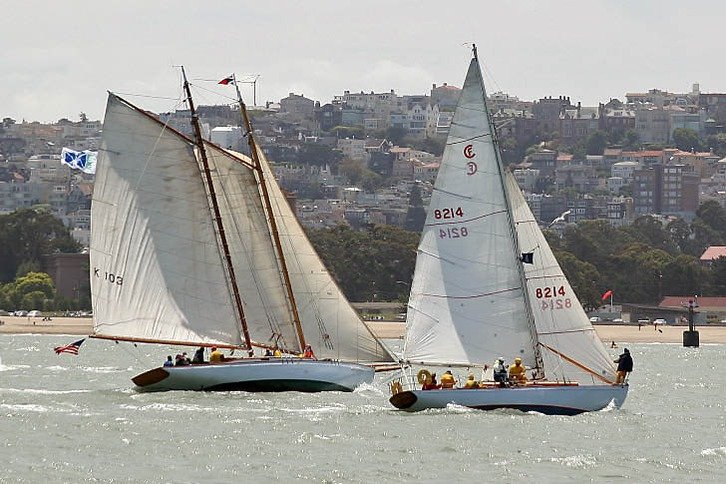
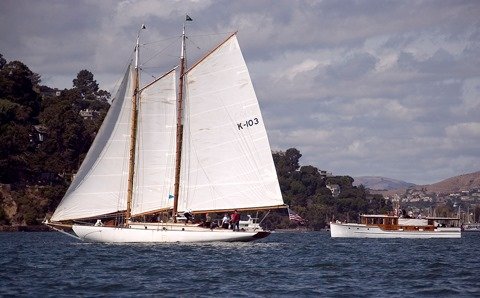
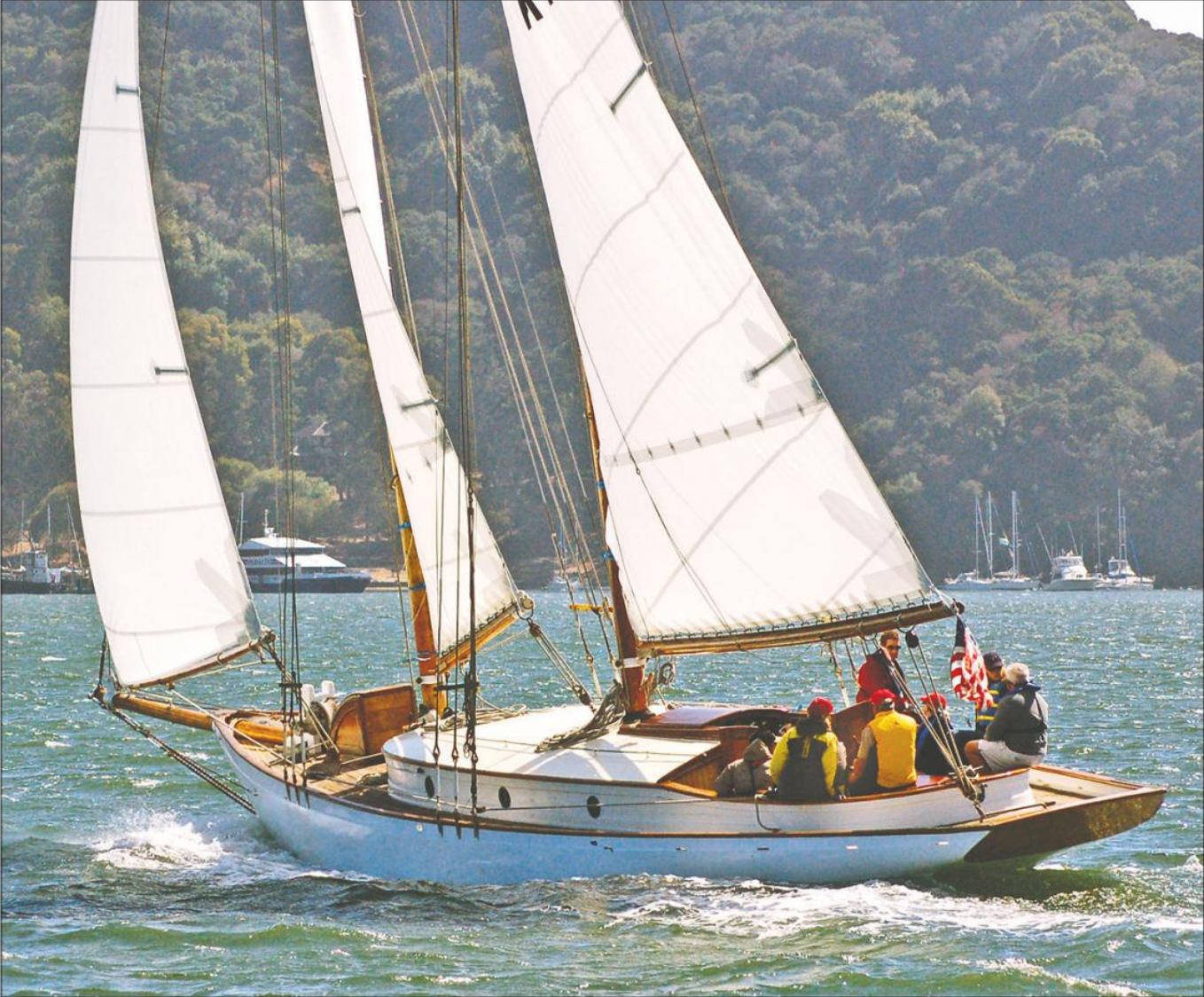
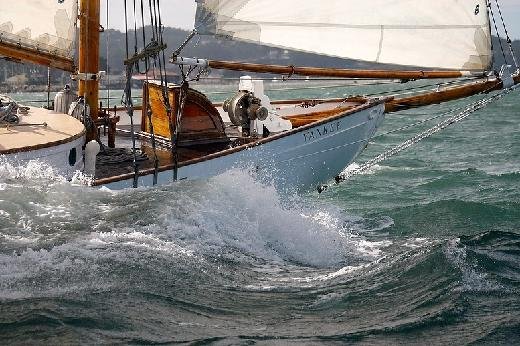
Designed by William Frank Stone and built at the Stone Boat Yard in San Francisco, Yankee was drawn for real wind, real chop, and real seamanship. For more than a century she has raced, cruised the California coast, and remained woven into the fabric of Bay sailing culture—not as a static artifact, but as a working yacht built for motion.
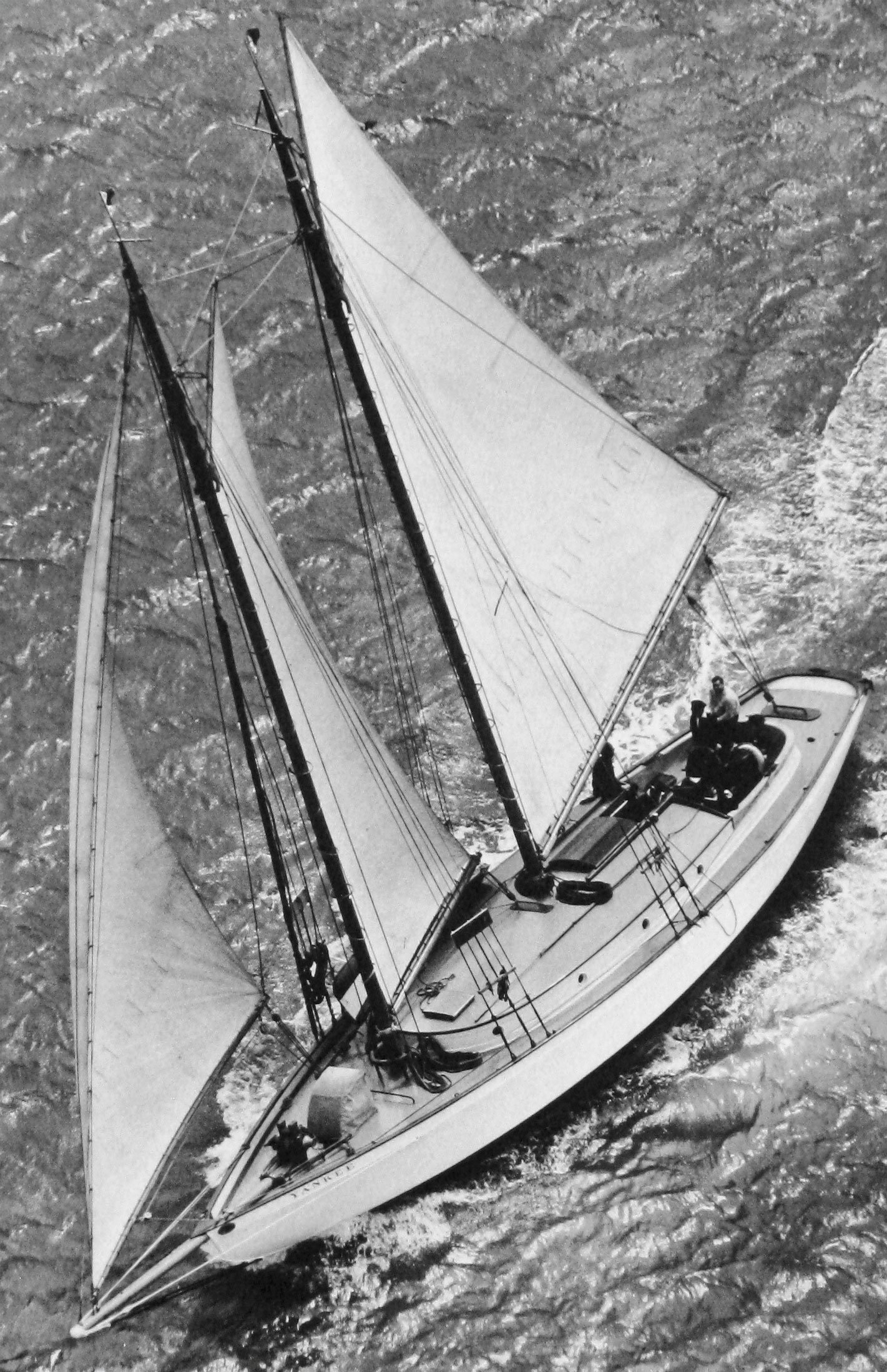
From early regattas to Pacific crossings and classic fleet competitions, Yankee has always belonged under sail and under capable hands. Through changing ownership and evolving eras of yacht design, she has lived as a vessel of motion, not memory.
Today she stands at a transition point—not in decline, but paused between chapters. Previous caretakers carried her through substantial structural renewal. Now a new generation steps forward to complete that work and return her to the water in full strength.
Mission — Stewardship Through Use
Golden Gate Wooden Boat Trust exists to keep traditional wooden yachts actively sailing on San Francisco Bay—not in museums, not as charter platforms, and not for static display, but under sail, in motion, and in capable hands.
We are building a structure that allows these boats to be used regularly and meaningfully, and that supports the craftspeople who keep that ecosystem alive. This includes experienced sailors who deepen real seamanship, and Bay Area artisans whose work sustains a living maritime culture.
Help Us Finish What’s Already Underway
This is not a rescue. Yankee’s restoration is already well advanced. Prior to the current pause, she underwent a major refit at KKMI in Point Richmond—the most technically demanding and invasive phase of the work. Critical structural elements including frames, stem, and forward planking were repaired or replaced to a high standard.
Her eight major spars—two masts, five booms, and a bowsprit—were removed, fully refinished, and placed in professional storage. A complete suit of new North Sails stands ready. More than 600 board feet of premium Douglas fir—tight-grained, clear, knot-free, air-dried to exacting specifications—has been sourced and preserved for the remaining carpentry. All cable standing rigging, running rigging, halyards, canvas covers, safety equipment, and original china remain in secure care.
The highest-risk and most technically complex portion of Yankee’s long-cycle refit is already behind us. What remains is primarily the work of verification, completion, and reassembly.
Restoration Phases & Funding
The remaining work is structured as deliberate phases—each with a clear purpose, scope, and funding target. Progress, funding, and risk reduction move in lockstep.
Phase 0 — Consolidation & Mobilization Up to $10,000
Bring hull, spars, timber, and all stored materials to a single working yard in Sausalito—establishing one coordinated site and ending redundant storage costs.
Phase 1 — Restart, Stabilization & Survey $10,000–$20,000
Yard intake, protective measures, a fresh condition survey of the hull and completed work, verification of stored spars and components, and production of a realistic, buildable work list.
Phase 2 — Hull Completion & Exterior Joinery $100,000–$200,000
Complete the interrupted hull work: close the hull where work paused, reinstate rails and bulwarks, address fastenings and joinery, and finish all exterior work to stop further degradation. When this phase concludes, Yankee is a complete hull capable of carrying deck and rig loads.
Phase 3 — Deck, Structure & Essential Systems $50,000–$100,000
Restore deck integrity, reinstall deck hardware, and address essential systems to a standard suited to a working and racing traditional yacht—safety, reliability, and maintainability consistent with long-term stewardship.
Phase 4 — Rig, Sails & Recommissioning $25,000–$75,000
Inspect and integrate the finished spars, standing and running rigging, and sails. Conduct sea trials and a measured reintroduction to Bay sailing—returning Yankee not as a museum piece but as an active participant in the sailing community.
Total campaign goal: $200,000–$300,000
Every dollar funds professional craft, materials, and berthing—not overhead, not salaries. The aim is to raise funds in $50,000 increments, with each phase unlocking the next.
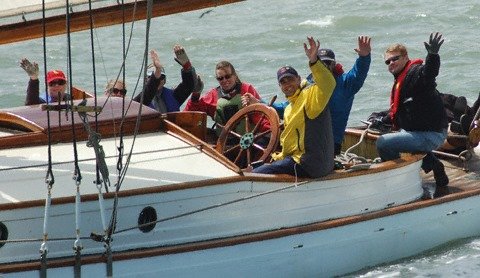
Our aim is simple: to see her crossing starting lines, heeling into the afternoon breeze, and gathering capable crews aboard for meaningful work under sail.
Yankee Under Sail
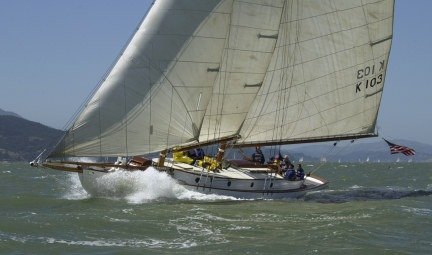
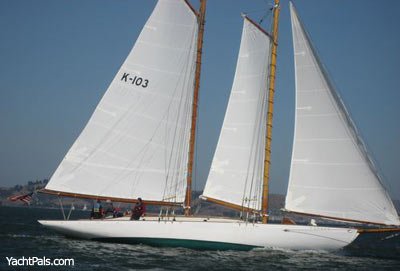
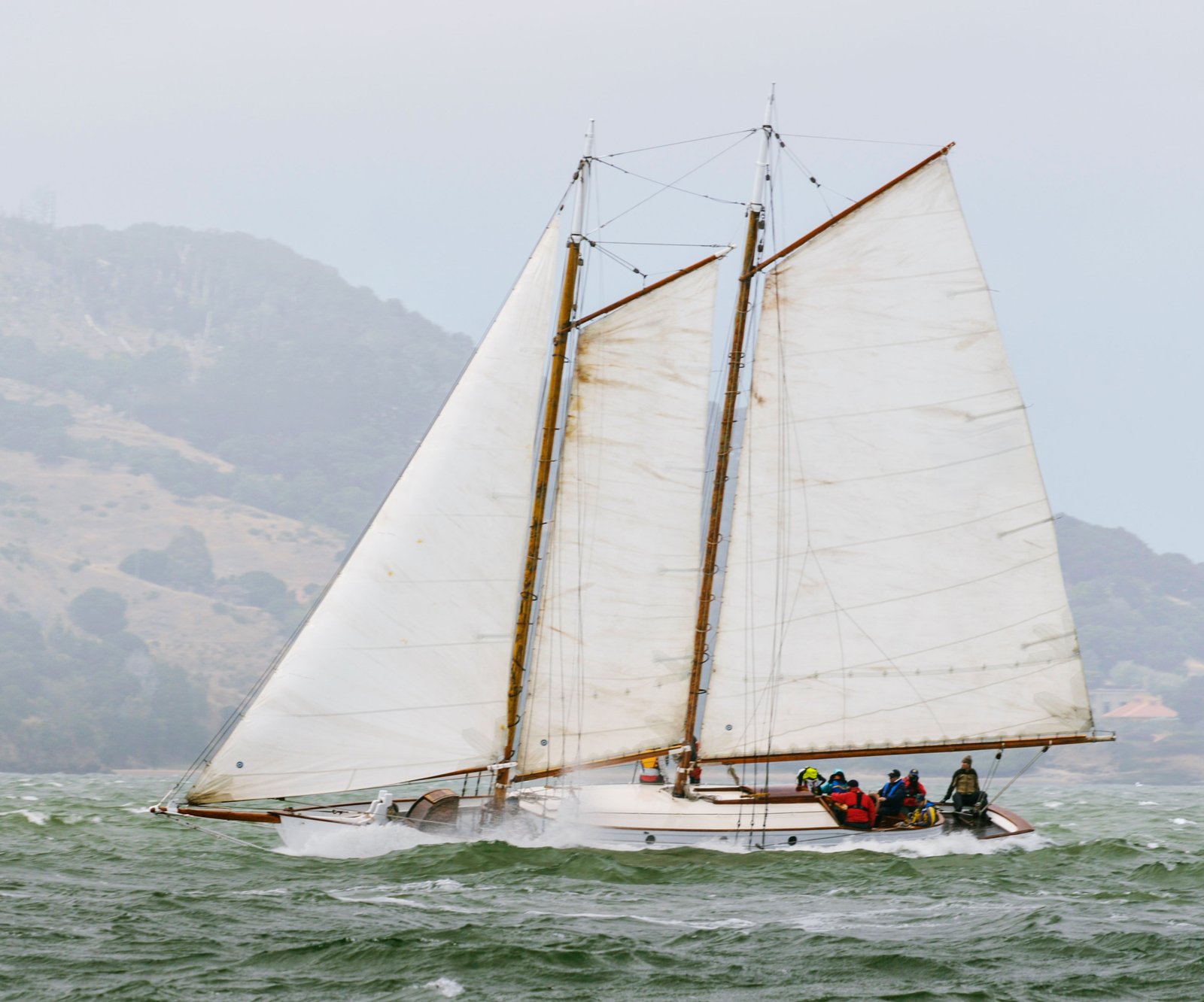
Yankee on San Francisco Bay—racing, cruising, and doing what she was built to do.