Chapter I · 1853–1906
The Builder
The Stone family built boats on San Francisco Bay for three generations — and Yankee was their masterpiece.
The story of Yankee begins with the family that built her. William Isaac Stone arrived in San Francisco from Dartmouth, England, around 1853. He learned wooden boat building as an apprentice. With the Gold Rush in full swing and San Francisco Bay still largely without shipyards, Stone saw an opportunity. He established a boat yard at Hunters Point and was granted a Master Carpenter’s Certificate. Over following decades he built small boats for oystermen, commercial schooners, and racing yachts. His sloop Emerald won the first race organized by the San Francisco Yacht Club in 1869 — the oldest yacht club on the Pacific Coast.
William Isaac Stone operated his Hunters Point yard until 1892, when his elder son, William Frank Stone — known universally as Frank Stone — succeeded him. Born around 1868, Frank had learned the trade from his father. In 1893 he opened his own yard at Tiburon, on what is now Beach Boulevard, in partnership with a man named Swann. The Stone & Swann yard built yachts, gasoline-powered launches, and rowing boats. Notable early productions included the 34-foot sloop Amigo (1896), the 52-foot sloop Nixie (1896), and the 38-foot sloop Gladys (1894).
In 1899, Frank Stone moved his family back to San Francisco and established a much larger yard at Harbor View, adjacent to the Presidio. His output ranged from fine racing yachts to commercial workhorses: steam tugs for the Alaska fishing trade, gasoline freighters for the lumber and oyster industries, and vessels for the Crowley tugboat fleet. In 1901 the yard produced the W. H. Marston, a 225-foot five-masted schooner — the first of that rig to be built in San Francisco — for the Hawaiian sugar trade.
The Stone Boat Yard at Harbor View became one of the most productive wooden boat shops on the Pacific Coast. In 1907 Stone launched the 66-foot schooner Martha, designed by B. B. Crowninshield for San Francisco Yacht Club Commodore J. R. Hanify. Martha would go on to have her own remarkable life — owned by actor James Cagney (1934–1943), later donated to a youth camp on Orcas Island, Washington, and today operated as a sail-training vessel by the Schooner Martha Foundation. In 1908 Stone launched the 200-foot steam schooner Carlos. And in 1918 the yard built the 180-foot three-masted schooner Palawan, whose carved figurehead and gold-leaf decorations were described as the last truly elaborate carvings executed for any Stone vessel. Palawan carried oil to Australia and copra from Tahiti to France before being destroyed in a German bombing raid in the Thames at the start of World War II.
When the city began planning for the Panama Pacific International Exposition in 1912, Frank Stone was obliged to vacate the Harbor View site. The Exposition would fill in the tidal flats and build its grand pavilions on the very ground where his yard had stood — the site that would later become San Francisco’s Marina District and, eventually, the home of the St. Francis Yacht Club. Stone moved his operation across the Bay to the Oakland Estuary. (See Chapter IV on the Exposition and Yankee.)
Frank Stone died in 1923. His brother Lester carried on the yard, building what was then the largest schooner on the West Coast — the 140-foot auxiliary schooner Northern Light — for Chicago businessman John Borden, who wanted a vessel strong enough for Arctic expeditions to collect specimens for the Field Museum.
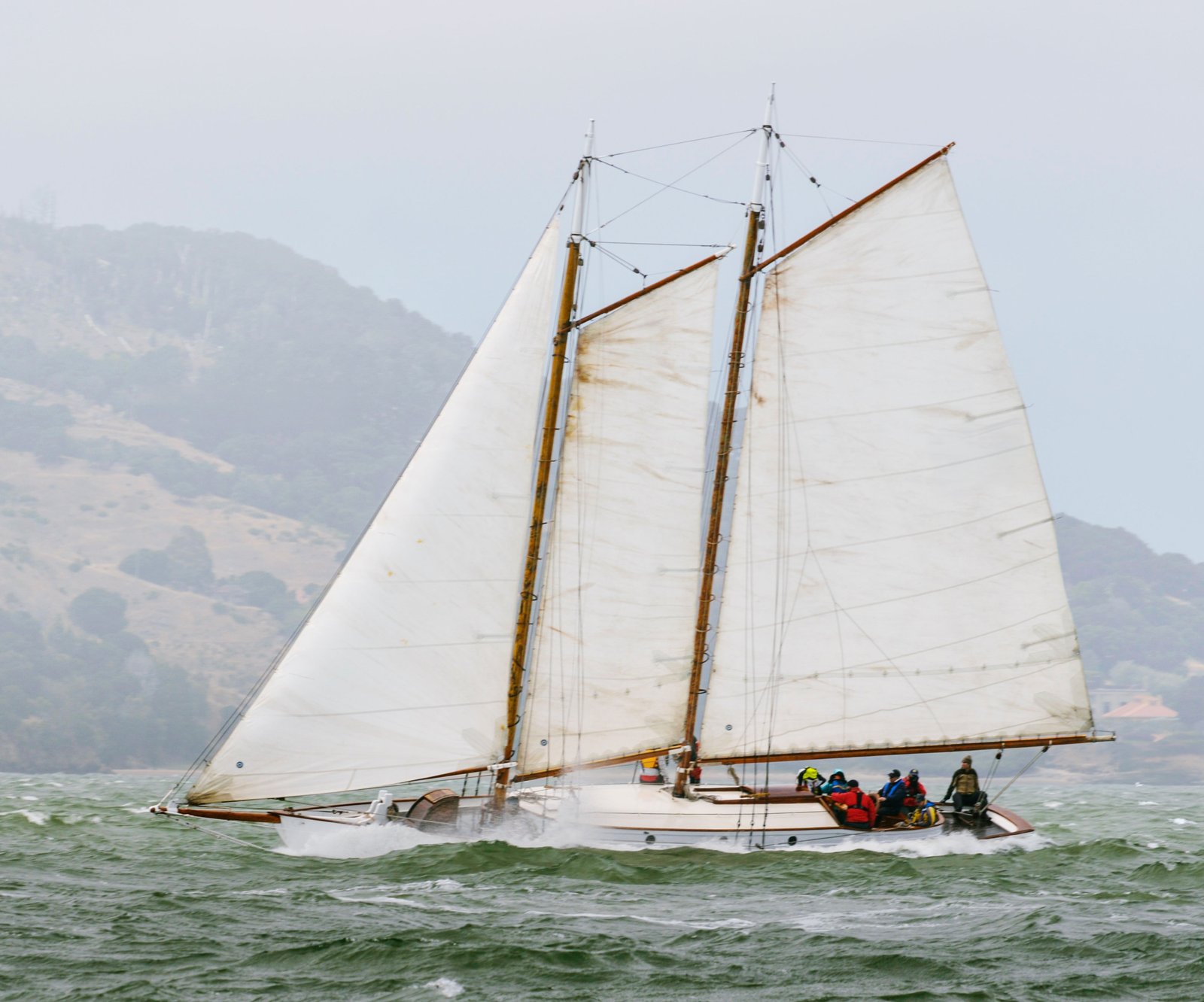
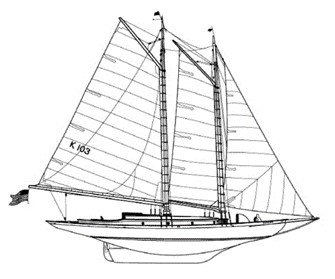
The Stone family’s contribution to San Francisco Bay maritime life spanned three generations and nearly three-quarters of a century, from the Gold Rush through the Roaring Twenties. Yankee, launched from the Harbor View yard in the spring of 1906, was one product of that tradition — and she is now the last Stone-built vessel still sailing on the Bay where she was born.