Chapter XI
Sailing Yankee
What it means to sail a big gaff schooner without winches, engines, or excuses — just muscle, timing, and nerve.
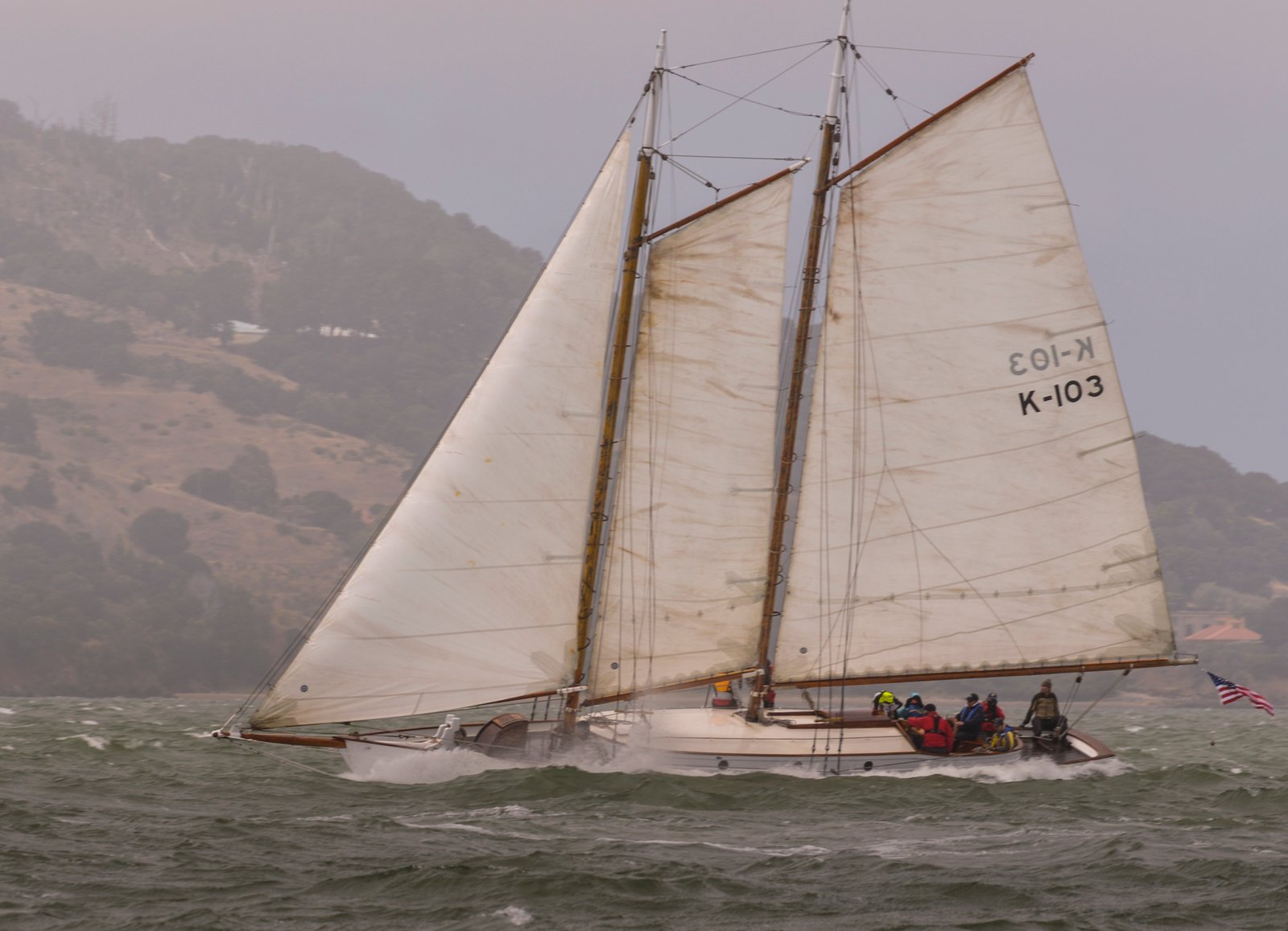
To understand Yankee’s character is to understand what it means to sail a big gaff schooner without mechanical assistance of any kind.

Her dimensions are: 52 feet 6 inches on deck, 62 feet 6 inches overall (including bowsprit), 36 feet on the waterline, with a beam of approximately 15 feet and a draft of 5 feet 10 inches. Her sail plan comprises a jib (395 square feet), a foresail (335 square feet), and a mainsail (745 square feet), for a total working sail area of 1,475 square feet. There are no winches. Every line is handled by the strength and coordination of the crew. (Cross-ref to Appendices C — Key Specifications.)
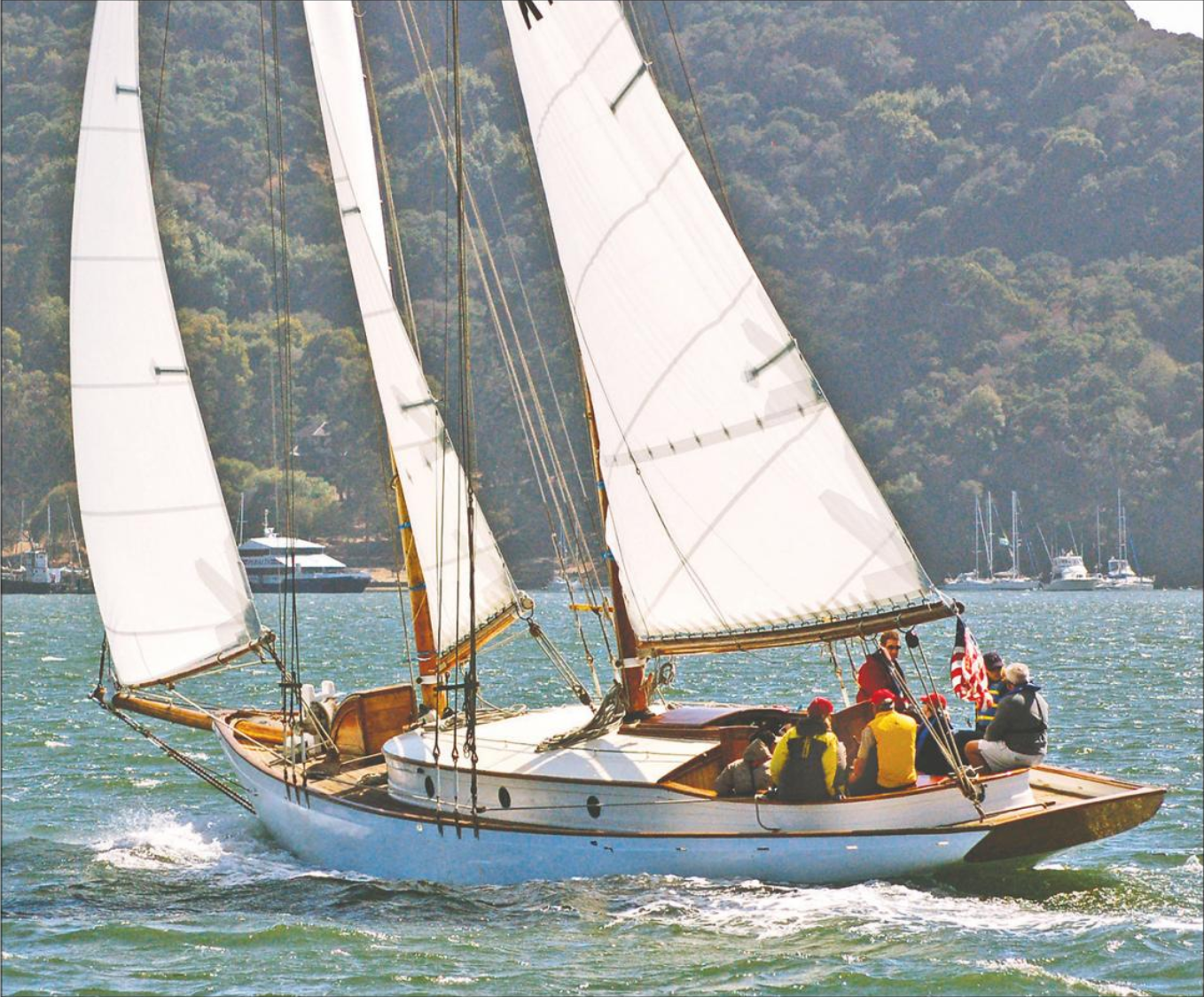
Sailing Yankee is a choreographed dance. When tacking or jibing, every crew member has a specific station and a specific job. The beefy fellow at the aft end of the cockpit grabs the mainsheet by the partners; his counterpart inside the cockpit works the cleat. The jib sheets run all the way back to the sides of the cockpit. Three crew on the housetop forward control the foresail, foregaff, and trimmer. Timing is everything: once Yankee is full and by, trimming becomes almost impossible in any sort of breeze.
When she is heeled down hard in a blow, Yankee transforms. Her wide, heavy hull becomes long and slender, and she drives through the water with a power that has astonished crews for over a century. She will surf, too — and it will, as one skipper warned, scare you to death.
Her current power plant is a Perkins 4-236 diesel engine, installed to replace earlier gasoline units.